Winter, in order
What happens to an empty lake house in February, in order.
February is the coldest stretch of the year from Saratoga Springs to Lake George, and the month a second home is least likely to have anyone in it. This is what happens to an empty house, in the order it happens, and what catches it.
In short
In February an empty house on the Northway corridor fails in a fixed order: the heat stops without anyone noticing, exterior walls drop below freezing within a day, a supply line freezes on the second day and splits when it thaws, and a half-inch line then runs at about six gallons a minute until someone shuts it. A weekly home watch visit catches the temperature drop, the tripped breaker or the empty propane tank before the line freezes. If nobody is checking, shut the water off at the main, keep the heat no lower than fifty-five, and put a connected thermostat and a leak sensor in.
Published · Updated
01The sequence
How a house fails, day by day.
Day 0
The heat stops, and nothing announces it
A power cut along Route 9N, a furnace that trips on a dirty filter, a propane tank that ran down faster than it did in December. The thermostat is set to fifty-five and nobody is there to notice it reads forty.
Day 1
The house cools from the outside in
Exterior walls, the crawlspace, the cantilevered room over the garage and the bathroom above it drop below freezing first. The supply lines in those walls are the ones that matter.
Day 2
A line freezes
Water expands as it freezes and the ice plugs the line. Nothing has broken yet. This is the last day the repair is a plumber and an afternoon.
Day 3 to 5
It thaws, and the split opens
A warm afternoon, or the power coming back, thaws the plug. The pipe split when it froze; now it runs. A half-inch supply line delivers roughly six gallons a minute, and on municipal water it runs until someone shuts it.
Day 5 to 7
Sixty thousand gallons
A week of flow is more than sixty thousand gallons. The basement fills, the finished ceilings below the leak come down, and the water finds the electrical panel. The sump pump, if it still has power, cannot keep up.
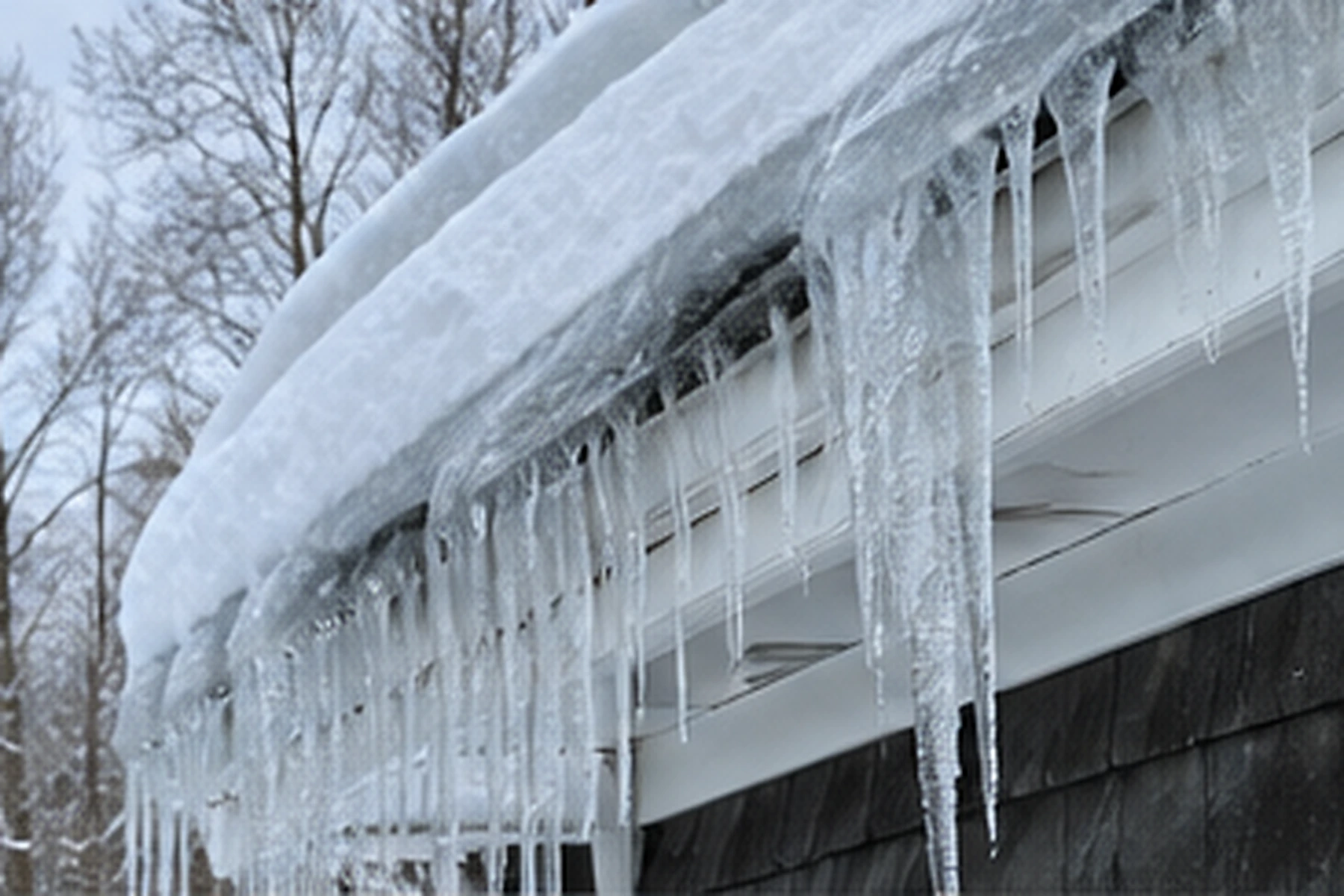
Meanwhile, on the roof
The ice dam has been building since January
Heat escaping the attic melts the snow above it; the water refreezes at the cold eave. Behind the dam, water backs up under the shingles. The stain on the bedroom ceiling shows up in April, weeks after the cause has melted.
And under the deck
Snow load
Screened porches, additions with flat roofs, decks and woodshed roofs carry the winter. Most hold. The ones that do not give way quietly on a night nobody is there.
02What a visit catches
Every one of those has a line on the checklist.
A home watch visit is not a drive-by. The steward opens the door, walks the written protocol top to bottom, records the readings and photographs what they see, on every visit, whether or not anything looks wrong. The lines below are the ones that matter in February.
- Interior temperature and humidity, read and logged, so a house drifting toward freezing is a number on a dashboard, not a surprise in April.
- Thermostat confirmed at your setting and the furnace or boiler confirmed running, with the electrical panel checked for a tripped breaker.
- Fixtures run and traps refilled, which keeps the lines moving and keeps sewer gas out of the house.
- The roofline, gutters and icicles photographed from the ground: an ice dam is visible weeks before the stain is.
- Basement, mechanical room and the area around the water heater and sump walked for standing water, and the sump float tested per protocol.
- The perimeter walked, so a limb down, a door blown open or a track in the snow that is not ours gets a photograph and a phone call.
03If nobody is checking
What to do yourself.
If you do not have anyone looking at the house this winter, these six things cover most of the damage. None of them replaces a person at the door, but they change the odds.
- 01Shut the water off at the main before you leave for the winter. If the house is being winterized, have a plumber drain the lines and protect the traps; if it is not, keep the heat on and the water off.
- 02Set the heat no lower than fifty-five, and put a connected thermostat in so you see the temperature from your phone. A leak sensor on the floor by the water heater costs less than dinner.
- 03Know where the shutoff is and tell someone local. The fastest response in the county is a neighbor with a key and a plan.
- 04Open the cabinet doors under sinks on exterior walls so room heat reaches the pipes. Drip a faucet on the coldest run during a deep freeze if the water is on.
- 05Keep the propane or oil topped up in January, before the coldest stretch, and confirm the generator, if there is one, actually ran on its test day.
- 06Have someone look at the roofline after every storm. Icicles at the eave are not decoration; they are an ice dam telling you where the heat is leaving.
04Pricing
Or have someone at the house every week.
Property Care
$250/ month
Two visits a month
Home Stewardship
$500/ month
Weekly visits
Estate
$1,000/ month
Twice-weekly visits
Every plan includes the same checklist, photographs, dashboard and named steward; the price follows how often we come. These are the prices for a house up to 4,000 square feet under roof. Everything outside the scheduled visits is $95 an hour, as used. Every plan in detail
05Service area
Home watch, town by town.
- Lake George
about 30 minutes from our base
- Bolton Landing
about 45 minutes from our base
- Saratoga Springs
about 5 minutes from our base
- Queensbury and Glens Falls
about 20 minutes from our base
- Schroon Lake
about 55 minutes from our base
- Lake Luzerne
about 30 minutes from our base
06Questions
Questions about an empty house in winter.
The ones that come in by email in January, answered here so they do not have to.
In a February cold snap on the Northway corridor, exterior walls, crawlspaces and rooms over a garage drop below freezing within about a day of the heat stopping, and a supply line in one of those spaces can freeze by the second day. The line does not usually split until it thaws, on day three to five, and that is when the water runs.
No lower than fifty-five degrees, with the cabinet doors under sinks on exterior walls left open so room heat reaches the pipes. A connected thermostat lets you see the temperature from your phone; a weekly home watch visit confirms it in person and photographs the reading.
Yes, at the main, unless the house is being winterized, in which case have a licensed plumber drain the lines and protect the traps. If the water stays on, keep the heat on, drip a faucet on the coldest run during a deep freeze, and make sure someone local knows where the shutoff is.
Weekly. A supply line can freeze within two days of the heat stopping, so a visit every week keeps the window between the heat failing and someone noticing short enough that the repair is usually a plumber and an afternoon rather than a general contractor and a season.
Heat escaping through the attic melts the snow above it; the meltwater runs down and refreezes at the cold eave, and the dam that forms backs water up under the shingles. The stain on the ceiling appears in April, weeks after the cause has melted. Icicles along the eave in January and February are the visible sign, and are photographed from the ground on every home watch visit.
Someone at the house on Tuesday.
Two hours at the house, at no charge, before the cold sets in. You get an honest read on what it needs and a written scope and price.